
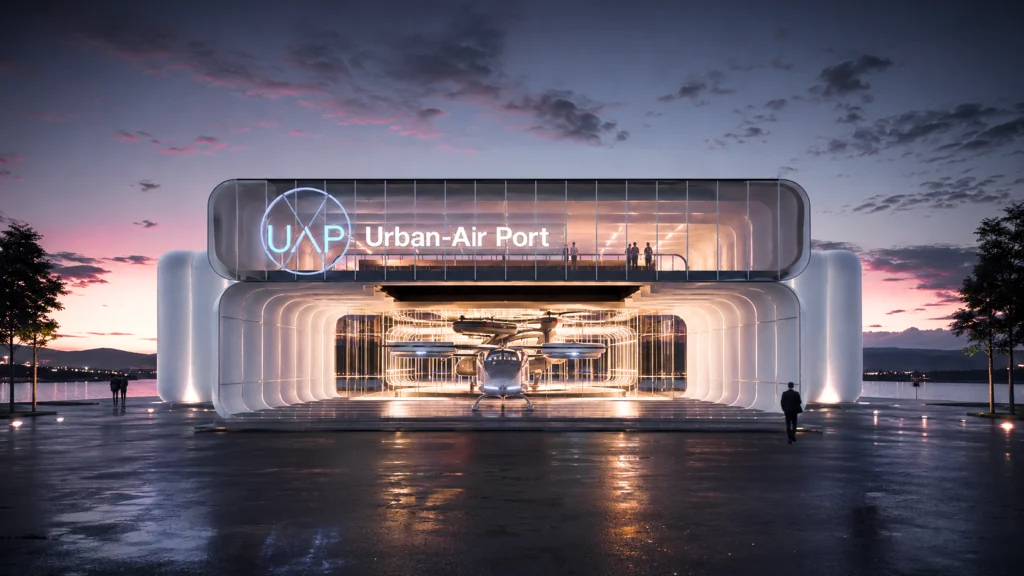
Urban-Air Port and AirClad have announced a strategic collaboration to accelerate the commercialization of Advanced Air Mobility through mass-producible, product-led infrastructure systems.
The partnership combines Urban-Air Port’s expertise in deployable AAM infrastructure systems and operational integration with AirClad’s strengths in product engineering and advanced manufacturing. Together, the companies plan to develop affordable, standardized solutions designed to enable the rapid deployment of connected vertiport networks.
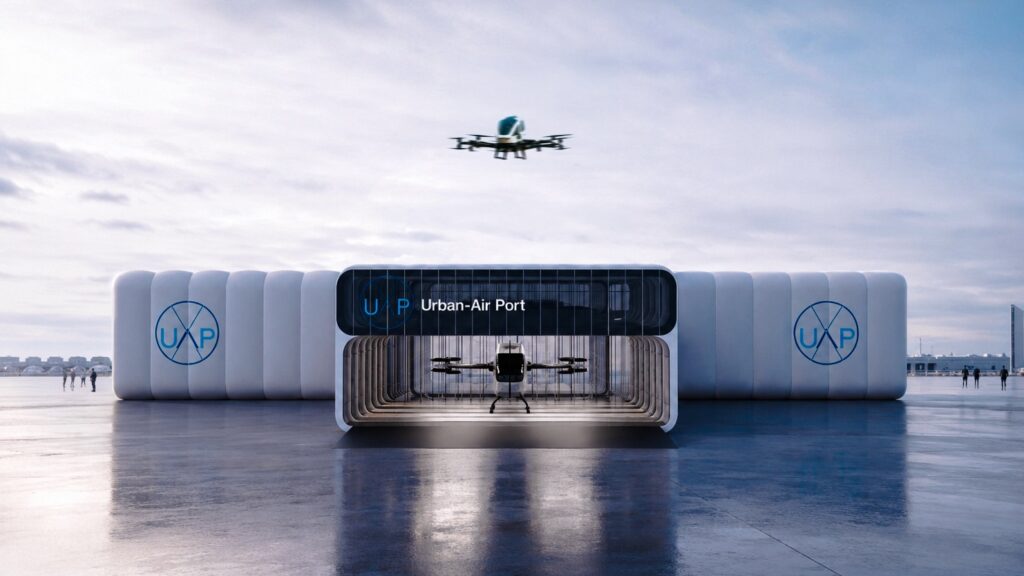
Both organizations operate on the principle that commercial Advanced Air Mobility must launch as an integrated network rather than evolving into one incrementally. Achieving commercial viability relies on connected networks that provide sufficient destinations and flight frequencies to create a compelling passenger experience and a sustainable business model from inception. Delivering these networks requires standardized, engineered solutions that can be manufactured and deployed at scale.
Urban-Air Port’s patented Vertical Airfield architecture achieves up to a 90% smaller operational footprint compared to conventional vertical take-off infrastructure while significantly lowering capital and operational expenses. By integrating these operational specifications with AirClad’s modular building systems, the companies aim to produce, assemble, and replicate high-throughput vertiports at speed.
“Advanced Air Mobility is approaching an important milestone. As the industry moves towards commercial deployment, success will depend on solutions that can be delivered repeatedly, efficiently and affordably. Urban-Air Port has established an important benchmark through Air One, and we’re excited to combine our expertise in product engineering and advanced manufacturing with Urban-Air Port’s deployable AAM infrastructure systems and operational expertise to help enable the next phase of AAM,” said Nick Crosbie, CEO at AirClad.
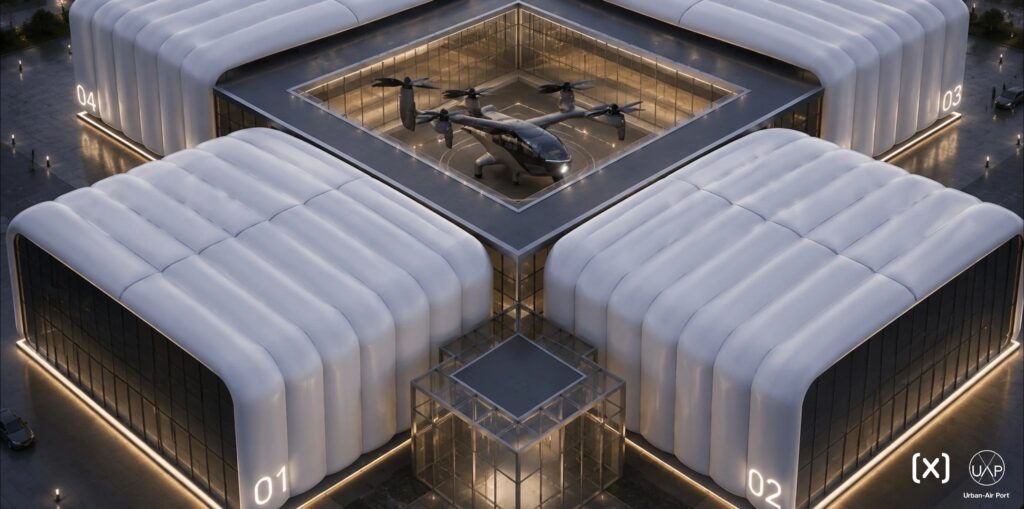
By treating the built environment as a standardized, productized system, AirClad integrates operational and technological requirements directly into its core manufacturing processes. This industrial production model aims to capture economies of scale, shortening deployment lead times and minimizing initial capital expenditure for network operators.
“Commercial AAM must launch as a network—not evolve into one. Commercial viability will be achieved through connected networks that provide sufficient destinations and flight frequency to create a compelling passenger experience and a sustainable business case from day one. That’s why we’re partnering with AirClad. Together, we’re combining Urban-Air Port’s expertise in deployable AAM infrastructure systems and operational integration with AirClad’s strengths in product engineering and advanced manufacturing to help enable the next phase of Advanced Air Mobility,” said Andrea Wu, CEO at Urban-Air Port.