

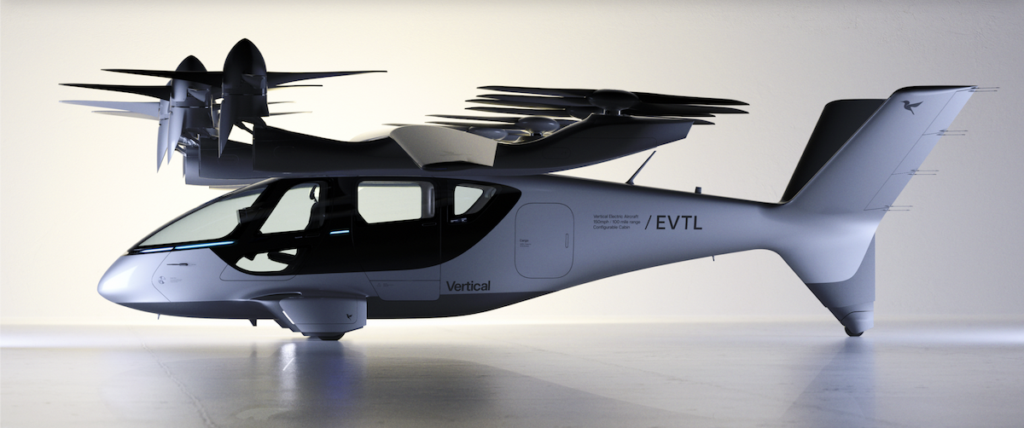
Global aerospace and technology company Vertical Aerospace has achieved two key program milestones with the start of integration testing for its next-generation hybrid-electric propulsion system and the production of the first all-electric Valo battery from an upgraded assembly line.
Stuart Simpson, CEO of Vertical Aerospace, said, “Hybrid capability complements our all-electric Valo platform and unlocks a broader range of civil and defence applications. At the same time, advancing our battery technology and manufacturing capability is critical to certification and scaling production. Together, these milestones demonstrate the strength and breadth of our technology platform.”
The next-generation hybrid-electric propulsion system has entered its testing phase on a dedicated Hybrid Propulsion Evaluation Rig (HYPER) located at the company’s Flight Test Centre at Cotswold Airport. This development follows more than two years of engineering work at the Vertical Energy Centre. The HYPER facility is designed to enable full system integration and validation of the hybrid powertrain, which includes the turbine, generator, and associated electrical systems. Testing will also focus on control architecture, system response, and fault scenarios prior to the commencement of ground and flight testing.
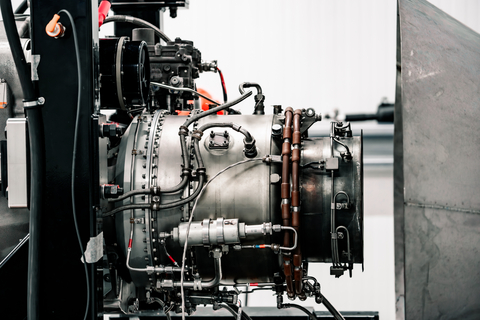
Vertical Aerospace is collaborating with multiple partners to integrate a sustainable aviation fuel (SAF)-compatible gas turbine with an electric generator, while leading the development of the core system integration, control architecture, and software. This turbogenerator will be integrated into a prototype hybrid-electric Valo aircraft for flight testing and demonstrations. The technology aims to validate systems for future hybrid variants, which are expected to significantly expand range, payload, and operational flexibility. The company is targeting certification for this hybrid-electric variant with the UK Civil Aviation Authority (CAA) and the European Union Aviation Safety Agency (EASA).
The targeted capabilities for the hybrid-electric variant include a range of up to 1,000 miles, representing a 10-fold increase over the all-electric aircraft. It features a configurable payload capacity of up to 1,100 kilograms within the Valo airframe. Additionally, low noise and heat signatures provide stealth advantages for sensitive missions. The hybrid-electric technology can be deployed autonomously, remotely, or with a pilot, with uncrewed capabilities seamlessly integrating into the existing Flight Control System being developed by Honeywell. The platform also leverages industry-leading redundancy and damage tolerance to boost mission resilience.
In parallel, the company reached a milestone in its proprietary battery program by producing the first battery pack on its upgraded assembly line, which launched in March 2026 at the Vertical Energy Centre. The 15,000-square-foot facility has housed the development of battery systems used in piloted flight testing since 2024. It has now been enhanced with automated, aerospace-grade manufacturing processes to improve efficiency, consistency, and performance.
These newly produced battery prototypes will undergo rigorous environmental and operational testing. Production from this line will support Vertical’s certification aircraft through the final stages of regulatory approval with the UK CAA and EASA, while establishing initial production capacity ahead of the aircraft’s entry into service.