
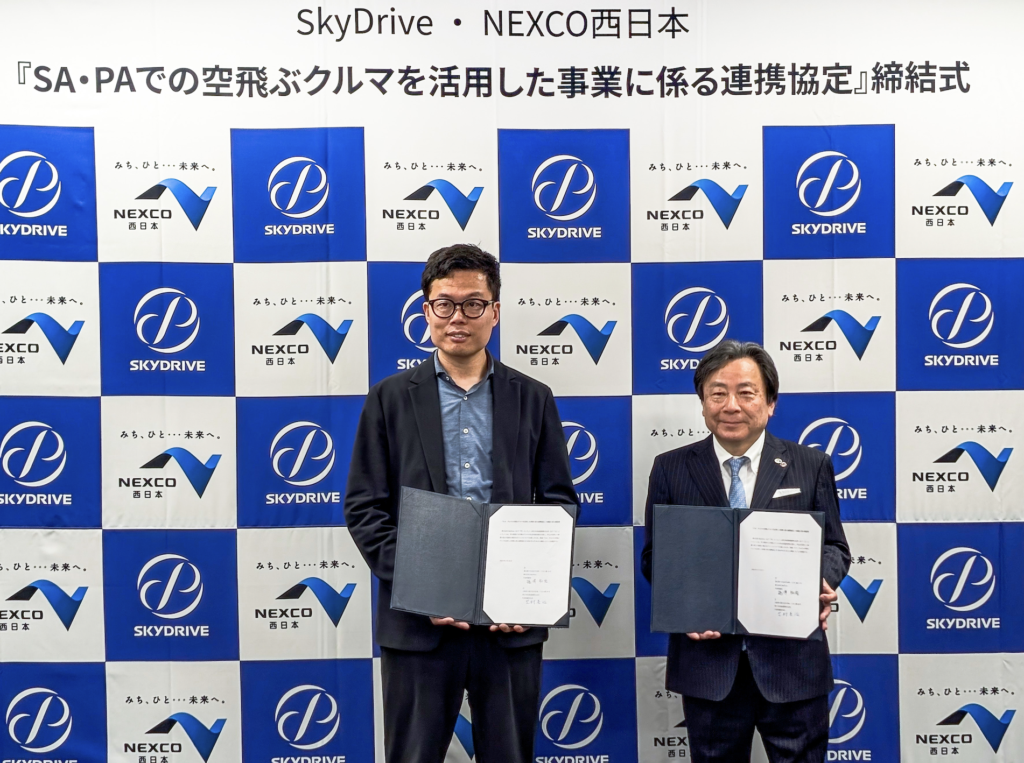
SkyDrive and West Nippon Expressway Company (NEXCO West) have signed a partnership agreement to investigate the commercial feasibility of using expressway service and parking areas as takeoff and landing hubs for next-generation air mobility services.
The collaboration focuses on utilizing the existing highway network, which features service facilities at intervals of 10 to 30 kilometers, as a foundation for electric Vertical Takeoff and Landing (eVTOL) operations. By transforming these rest stops into departure points for sightseeing flights, the partners intend to create new consumer value and stimulate local economies. Beyond tourism, the initiative explores the use of SkyDrive’s aircraft for disaster mitigation, providing authorities with a means to assess infrastructure damage from the air and coordinate reconstruction efforts following natural disasters.
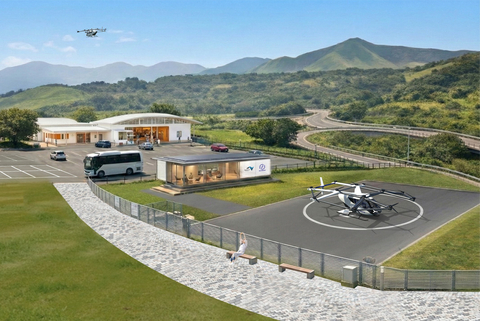
This agreement aligns with NEXCO West’s “MOVE!2030” mid-term management plan and the broader goal of creating a technological legacy from the Expo 2025 Osaka. SkyDrive, which successfully demonstrated flights of its “SKYDRIVE” Model SD-05 during the Expo and in Tokyo, is currently working toward a target of commercial operations in 2028.
SkyDrive CEO Tomohiro Fukuzawa, said, “SkyDrive is honored and delighted to enter into this partnership with NEXCO West. In developing our aircraft, we are looking to lead this “once-in-a-century” mobility revolution. This new partnership is a meaningful step forward for our business. Combining the expertise in managing road infrastructure delivered by NEXCO West with the easy access to short-hop air travel and sightseeing flights delivered by SkyDrive opens up a new realm of possibilities.
“The service areas and parking areas within NEXCO West’s extensive network of expressways already serve large numbers of visitors. Adding air mobility services to the shopping and other facilities already on offer will add to the appeal of this highway infrastructure, turning these already busy waystations into a gateway to the skies. SkyDrive’s air mobility services will not only be able to increase value for tourists through sightseeing flights, they may also help provide peace of mind to local residents through a future role in post-disaster recovery. In partnership with NEXCO West, we are proud to be taking firm steps towards new value creation as we work to bring the next generation of air mobility technology to people in the regions served by NEXCO West’s expressway network.”
NEXCO West President and Representative Director Yoshiharu Shibamura noted the strategic importance of the collaboration, saying, “SkyDrive is Japan’s leading pioneer in bringing ‘flying cars’ to life, already working in close partnership with numerous local governments and infrastructure companies. We are deeply honored to have entered into an agreement to collaborate and move forward with these initiatives together.
“The future availability of sightseeing flights from our service and parking areas would bring new vitality and economic benefits to these facilities, further elevating them from rest facilities to destinations in their own right. Basing SkyDrive’s aircraft alongside our highways will also open up possibilities for assessing post-disaster damage and measures for reconstruction, helping to mitigate the adverse effects of Japan’s frequent earthquakes and other natural disasters.
“As a corporate member of the Kansai Economic Federation (Kankeiren), we note how SkyDrive’s approach to air mobility also aligns with Kankeiren’s philosophy of harnessing the 2025 Expo in Osaka to spur the adoption into society of cutting-edge technology.
“Through this partnership with SkyDrive, we look forward to pooling our resources and examining in detail the commercial and disaster mitigation possibilities of this remarkable new technology, ensuring that we work closely together to explore specific use cases and potential service areas.”
As the partnership progresses, the two companies will conduct detailed research into specific locations and deployment strategies. The goal remains to harness the existing expressway infrastructure as a base for regional economic stimulus and improved emergency response capabilities.