
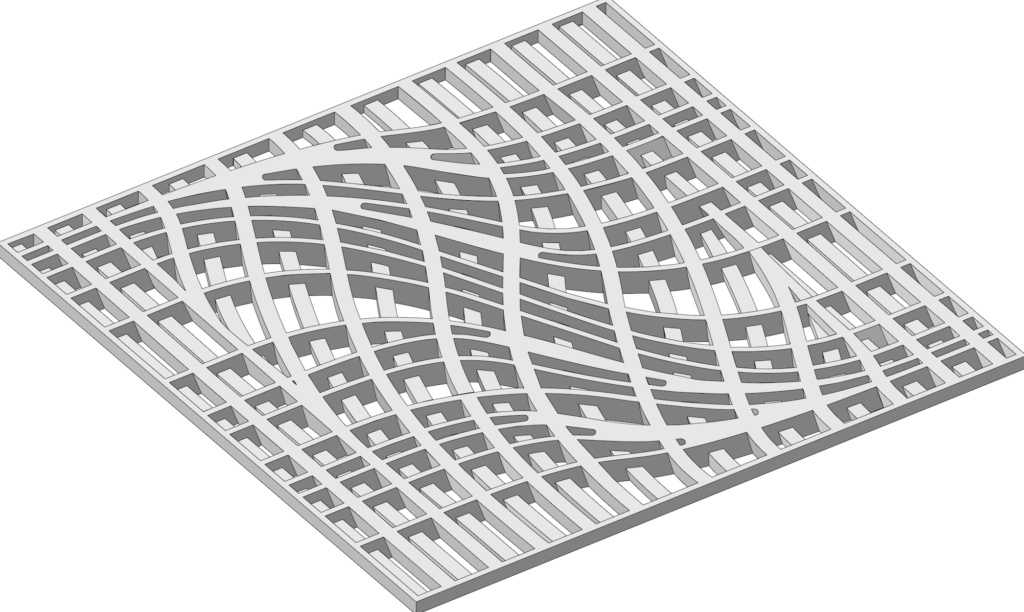
Skyportz Australia has officially launched Aeroberm, a patented modular vertipad system designed to address the primary safety and logistical barriers preventing the widespread deployment of air taxi infrastructure.
The commercial debut took place simultaneously at the VFS Forum 82 in West Palm Beach and Rotortech 2026 on the Gold Coast, showcasing a technology intended to move aviation beyond existing heliports and into dense urban environments.
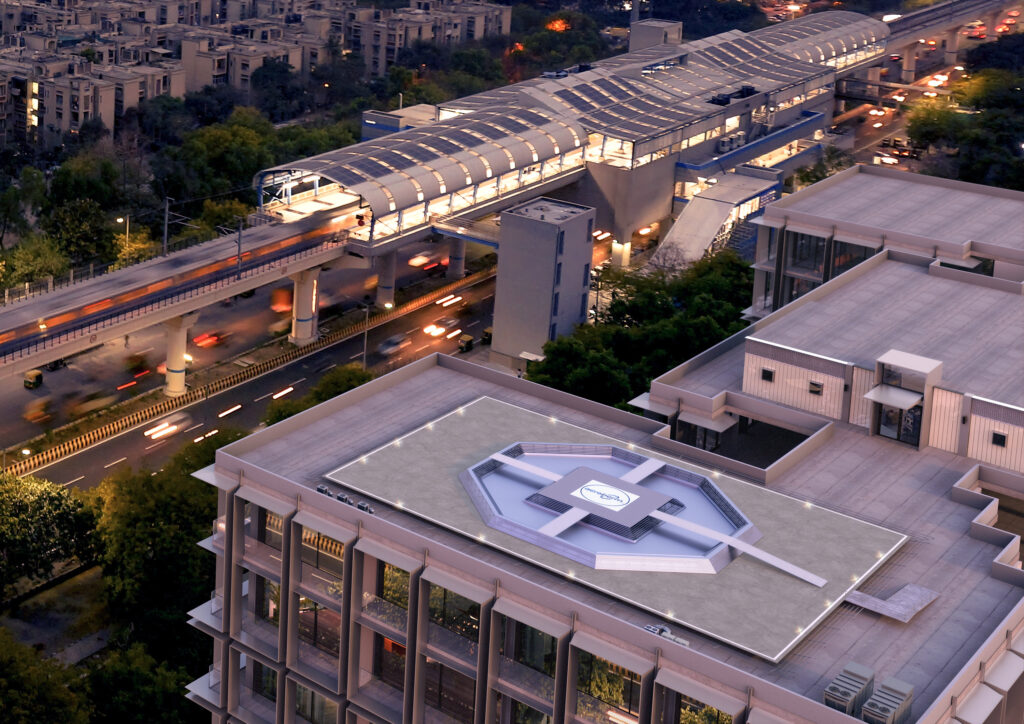
While billions of dollars have been invested in electric Vertical Take-Off and Landing (eVTOL) aircraft, the industry faces a significant deficit in viable landing sites. Without a dense and affordable network of infrastructure located on buildings, in suburbs, and at regional hubs, the vision of aviation on demand remains restricted.
Clem Newton-Brown, Founder of Aeroberm and Skyportz Australia, said, “You can’t build an aviation network without places to land. Right now, other than legacy helipads, we don’t have them.”
The Aeroberm system utilizes fractal panel technology to manage the physical forces generated during take-off and landing. According to the FAA’s Engineering Brief 105A, outwash must remain below a 34.5 mph threshold. Conventional tarmac surfaces require vast buffer zones to meet this safety standard, which is often impossible in mature cities due to land scarcity and cost. Aeroberm’s panels are engineered to redirect and dissipate outwash, significantly shrinking the required safety footprint.
In addition to airflow management, the system addresses noise and fire safety concerns that often lead to community and regulatory resistance. The fractal geometry helps reduce the acoustic impact of aircraft at the pad level. To mitigate the risks associated with lithium-ion thermal runaway, the system includes an integrated immersion-based “dunk tank” designed to contain and neutralize battery fires, protecting the surrounding structure and preventing long-term evacuations.
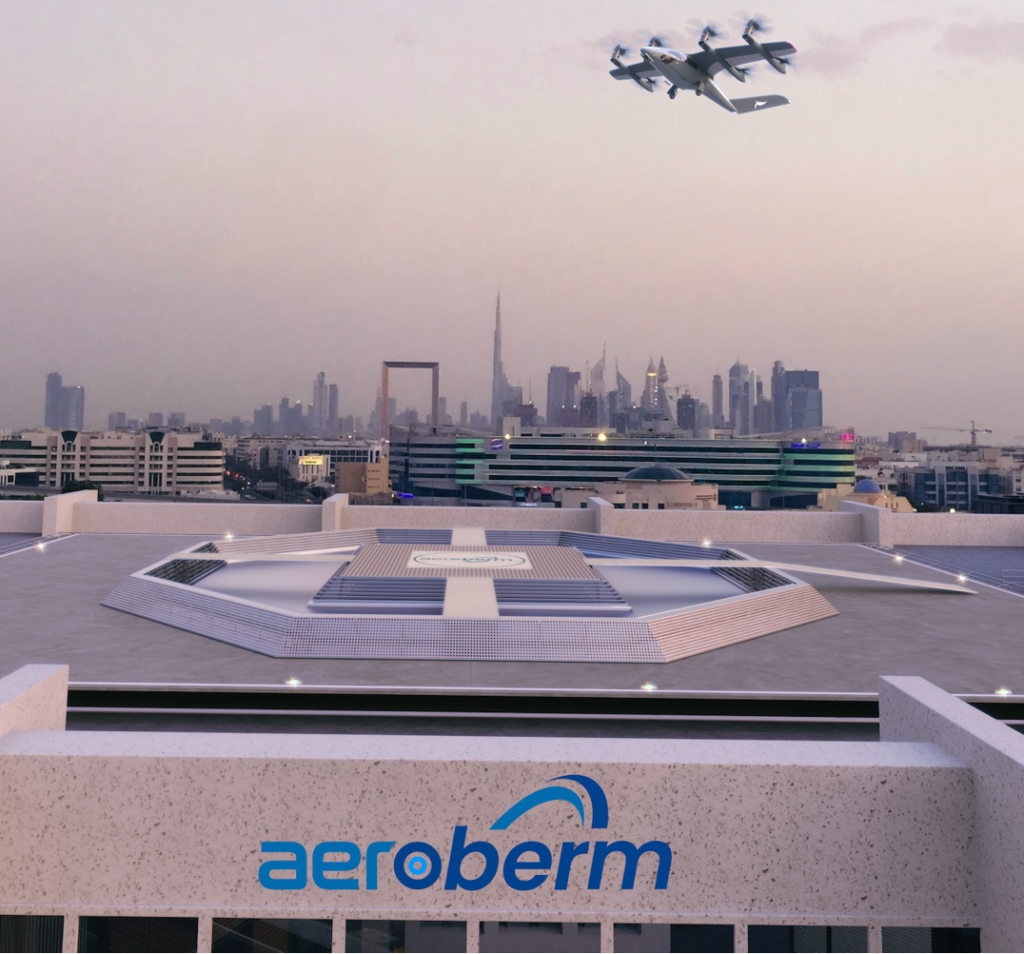
Newton-Brown stated, “Noise, fire, outwash, cost — these aren’t engineering curiosities. They’re the reason vertiports aren’t being built. Aeroberm addresses all four.”
The technology is supported by peer-reviewed computational fluid dynamics research conducted at Swinburne University. This research represents the first instance of CFD modeling of fractal surface geometry applied specifically to eVTOL ground operations. The findings are being presented globally by researchers Andrew Che and Professor Justin Leontini.
By offering an off-the-shelf, modular design, the system aims to lower the prohibitive costs associated with bespoke vertiport construction, making the infrastructure more accessible to property developers and regional operators.