

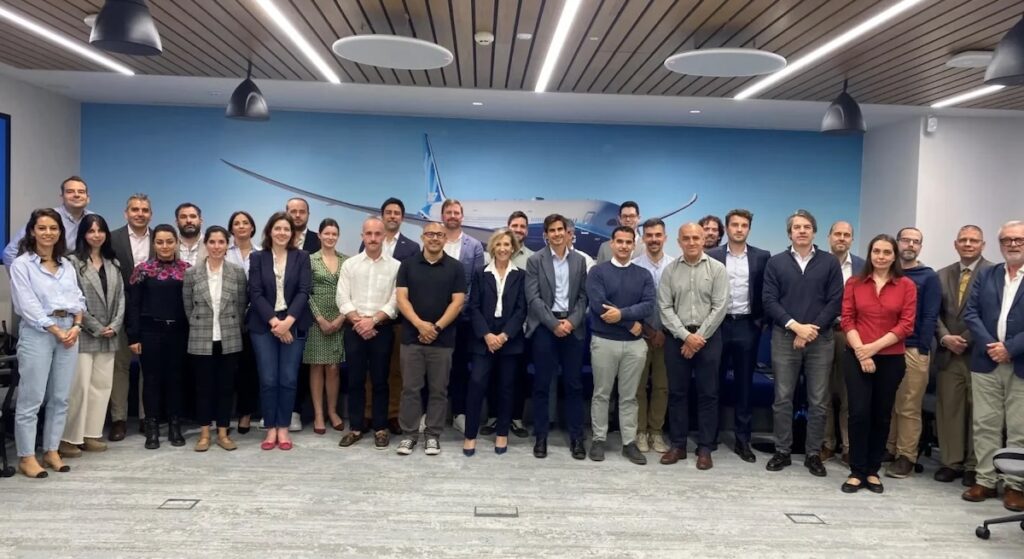
SkyGrid is developing and validating the digital services required to ensure autonomous urban flight is safe, scalable, and ready for market as part of Boeing’s VARIANT research initiative.
The project, officially titled Validation of AiRspace Integration Applications and New Technologies, was announced by Boeing Aerospace Spain (BAS) to enable the integration of electric and autonomous aircraft into current airspace environments. While the consortium involves several engineering firms and academic institutions, SkyGrid is specifically tasked with advancing the ground-based intelligence layer necessary for predictable aircraft operations.
Technical development is focused on four core capabilities designed to make autonomous flight reliable. These include ground-based traffic surveillance using radar and ADS-B/FLARM sensor networks to monitor both cooperative and non-cooperative aircraft, and the integration of high-resolution micro-weather data for low-altitude flight planning. Additionally, the project addresses vertiport resource management for autonomous scheduling and the validation of LTE-based monitoring to detect GNSS spoofing and jamming threats.
Jia Xu, CEO of SkyGrid, commented, “Safe autonomous aerial operations depend on reliable situational awareness, resilient positioning and timing, and intelligent vertiport management. VARIANT accelerates the development and validation of these ground-based services for high-density, low-altitude environments.”
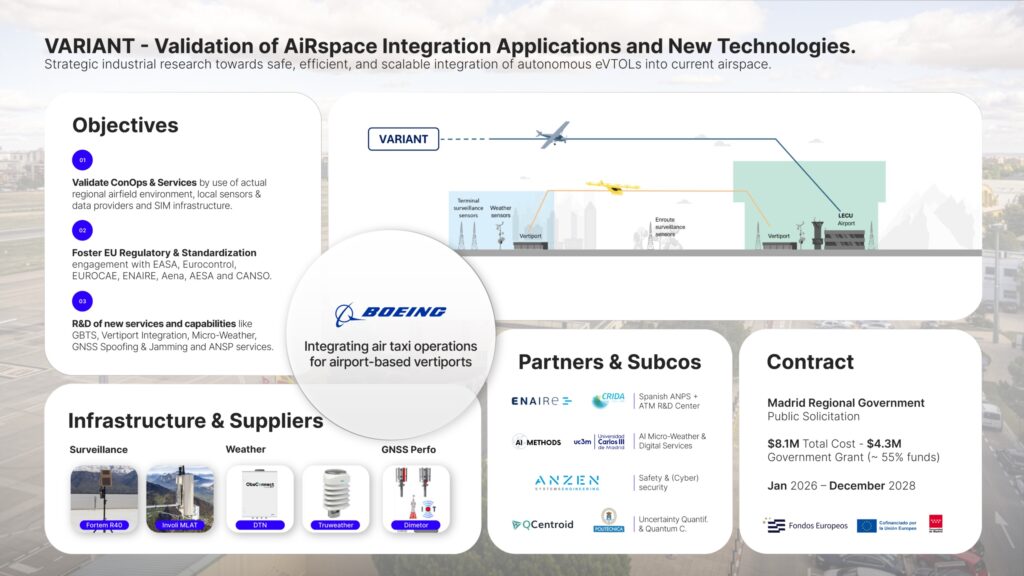
The initiative utilizes a structured methodology grounded in NASA Technology Readiness Levels 1 through 4. Prototyping and real-world validation take place at a high-fidelity operational testbed at the Madrid Cuatro Vientos aerodrome. This environment allows for human-in-the-loop simulations involving air traffic controllers and operators to ensure the technology functions within complex airspace.
A critical component of the project is the collaboration with ENAIRE, the national Air Navigation Service Provider for Spain. ENAIRE provides operational expertise and access to U-space and Air Traffic Control (ATC) simulators, enabling validation within a real regulatory environment aligned with European frameworks ahead of formal certification.
The technical infrastructure for the project includes specialized sensor hardware from providers such as Fortem, Involi, DTN, TruWeather, and Dimetor. This equipment supports the generation of proprietary data in digital surveillance, micro-weather, and GNSS security. By testing against real-world aircraft and weather patterns, the project aims to establish a validated service stack for the next generation of urban air traffic management.