
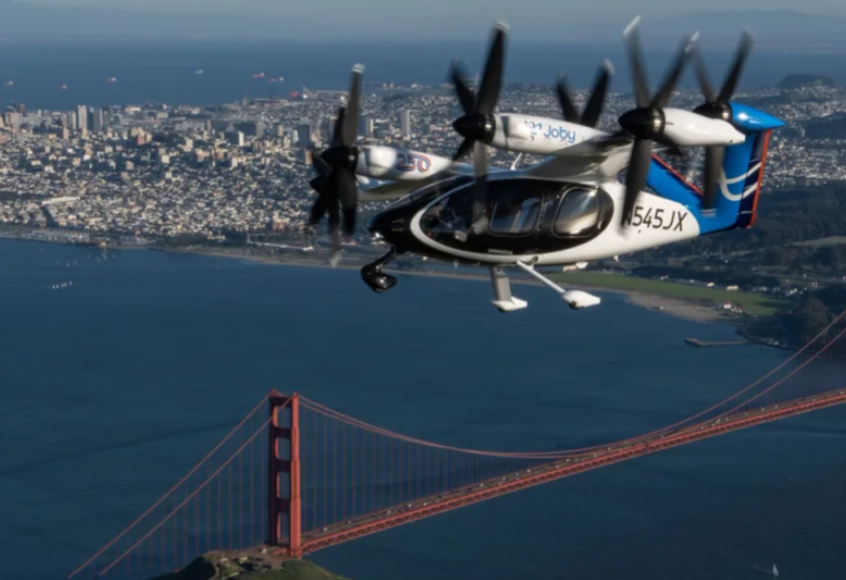
Joby Aviation has completed a series of piloted demonstration flights across the San Francisco Bay Area using its electric air taxi.
The flights, which included a route from Oakland International Airport to the Golden Gate Bridge and Marin Headlands, serve as the kickoff for the company’s 2026 Electric Skies Tour. This national showcase is intended to demonstrate the operational readiness of emissions-free flight in regions defined by heavy traffic congestion and geographical barriers. The aircraft used in the demonstration, piloted by Andrea Pingitore, is part of a fleet that has logged more than 50,000 miles across thousands of test flights.
The company has been selected as a partner under the White House-backed eVTOL Integration Pilot Program (eIPP). This selection provides the opportunity to begin early operations across 10 states, including New York, Texas, Florida, and California. This milestone is viewed as a significant step in accelerating the path to commercial service within the U.S. air taxi industry.
JoeBen Bevirt, Founder and CEO of Joby, said, “The Bay Area is home to the world’s most innovative companies, including Joby, but it’s also an area with significant traffic and unique geographical barriers. Our technology provides an opportunity to build on the immense potential of this region while protecting it for the next generation. By providing clean, quiet service with minimal infrastructure investment we are making flight an everyday reality for the community.”
The demonstration comes as San Francisco continues to face high levels of urban congestion, with local drivers losing an average of 112 hours to traffic in 2025. Joby aims to address these delays by converting long ground commutes into short aerial journeys. To support this integrated ecosystem, the company has established strategic partnerships with Delta Air Lines and Uber.
On the regulatory front, Joby is progressing toward certification following the successful flight of its first FAA-conforming aircraft for Type Inspection Authorization (TIA). This milestone enables FAA pilots to begin “for credit” testing later this year. The aircraft design prioritizes acoustics, safety, and performance to meet the requirements of the urban aerial ridesharing market.
To meet anticipated demand, the company is expanding its manufacturing operations. Current facilities in Marina and San Carlos, California, are being supplemented by a 700,000-square-foot facility in Dayton, Ohio. These sites are designed to support a production rate of four aircraft per month by 2027, with the Dayton location eventually capable of delivering up to 500 aircraft annually.