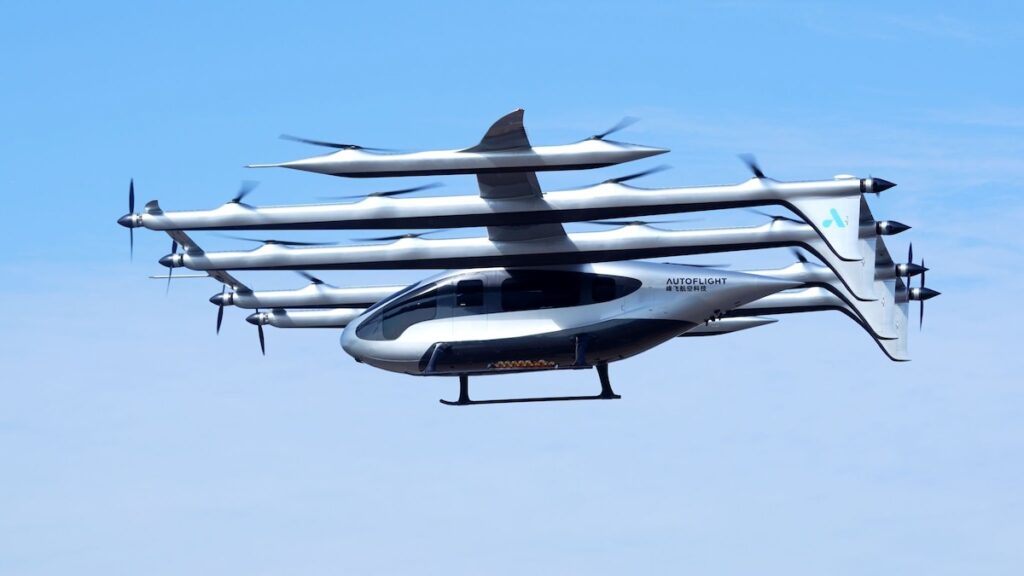
AutoFlight has successfully conducted the first public full transition flight of Matrix, marking the world’s debut of a 5-ton class electric Vertical Take-Off and Landing (eVTOL) aircraft.
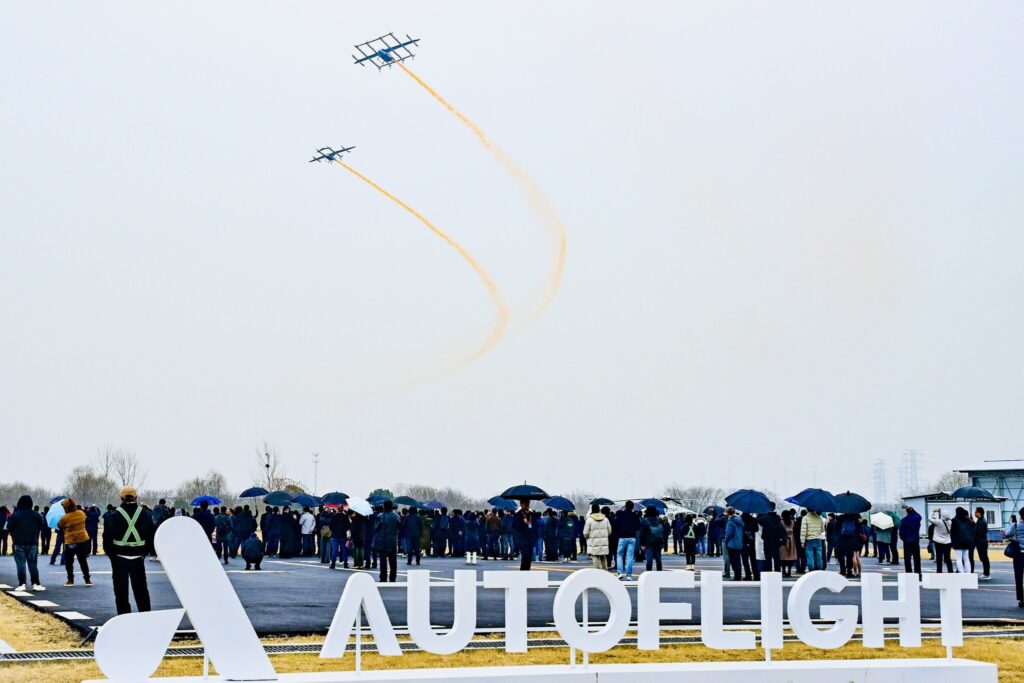
During a demonstration at the company’s low-altitude flight test facility, the Matrix flew alongside the smaller 2-ton CarryAll cargo variant to showcase its ability to transition from vertical take-off to cruise flight and back to a vertical landing. This milestone validates the manufacturer’s high-power electric propulsion and flight control systems within a heavy-lift airframe. With a maximum take-off weight of 5,700kg, the aircraft measures 17.1 metres in length and features a 20-metre wingspan.
The platform is designed for versatility, offering both passenger and cargo configurations. The passenger model is equipped with a cabin providing 13.9m³ of interior volume and can be configured with either six VIP or 10 business-class seats. The interior includes climate control, ambient lighting, and oversized windows designed for 50% enhanced light transmission. Conversely, the cargo variant utilizes a hybrid power system to support a 1,500kg payload. To streamline logistics, the cargo model includes a large forward-opening door capable of housing two AKE standard air cargo containers.
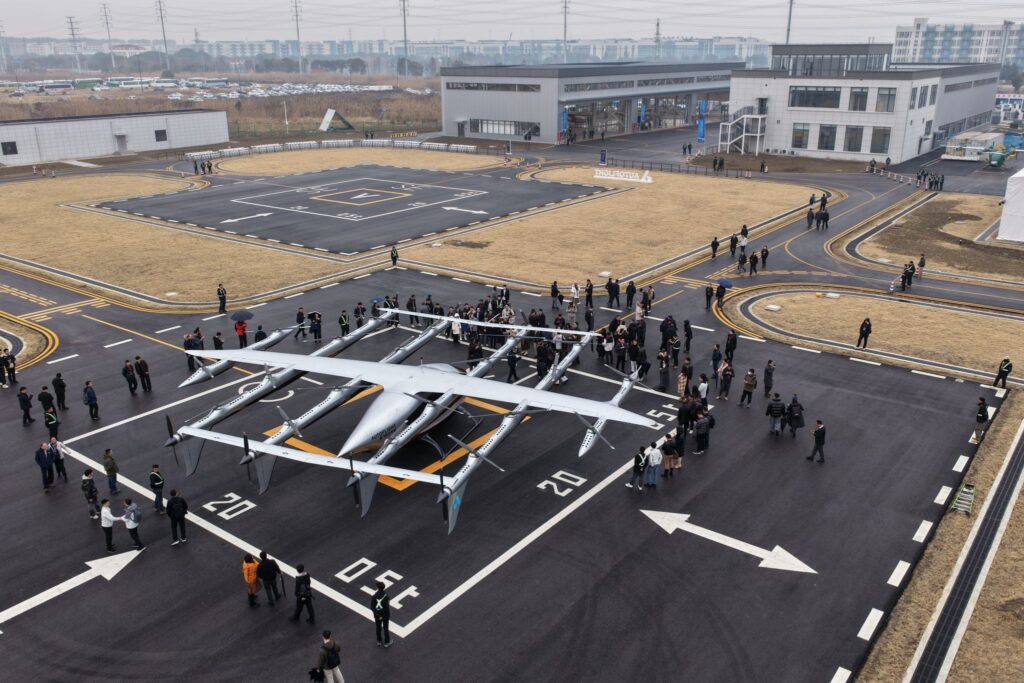
Engineering for the Matrix centers on a compound wing “Lift and Cruise” configuration characterized by a triplane layout and a six-arm structure. This design is intended to maintain aerodynamic stability across all flight phases. For propulsion, the aircraft uses a high-voltage architecture featuring up to 20 fifth-generation lift motors. This distributed system provides significant redundancy, allowing the aircraft to remain operational even in the event of single or dual engine failures.
Performance capabilities vary based on the powertrain selected. The pure electric version of the Matrix offers a range of 250km, while the hybrid-electric variant extends that reach to 1,500km. Given its scale and lift capacity, the aircraft is positioned for use in heavy logistics, regional travel, and large-scale emergency response operations.