
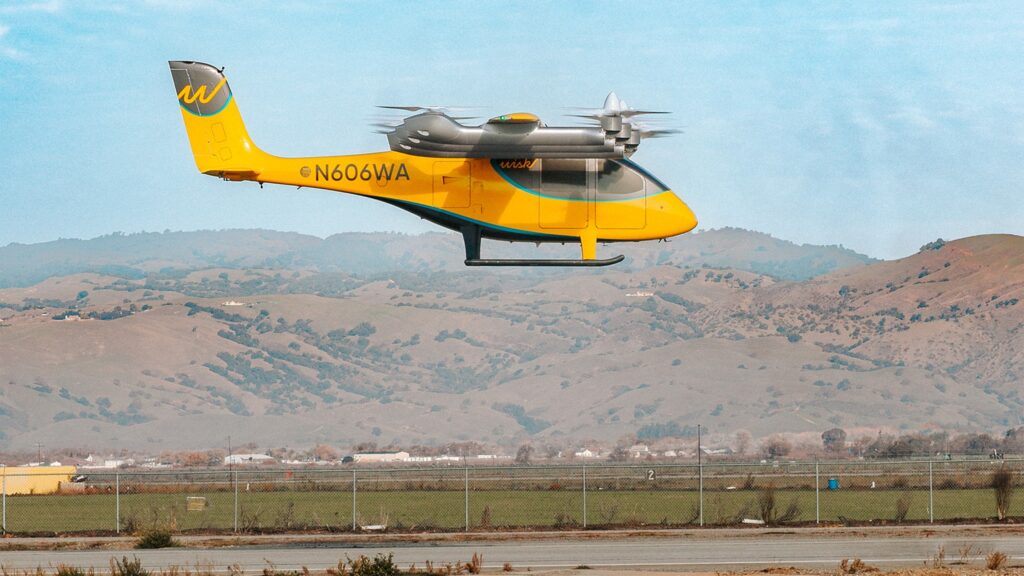
Wisk Aero has successfully completed the first flight of its Generation 6 aircraft, marking a significant milestone in the effort to bring autonomous passenger-carrying flight to the United States market.
The initial flight tests took place at the company’s facility in Hollister, California, where the aircraft performed vertical takeoff, hover, and stabilized flight maneuvers. This success serves to validate the core flight systems of the Generation 6 model, which is the specific aircraft tied to Wisk’s ongoing type certification application with the Federal Aviation Administration (FAA).
As the only company to have developed and flown six generations of eVTOL technology, Wisk is leveraging more than 1,750 previous test flights to refine this latest platform. The Generation 6 is designed as an all-electric, autonomous vehicle that utilizes a ground-based Multi-Vehicle Supervisor for human oversight. This operational model is intended to meet rigorous commercial aviation safety standards while ensuring the service remains scalable and affordable.
Sebastien Vigneron, Wisk CEO, stated, “This first flight is the moment our team has been working toward, and it is a powerful demonstration of the work, expertise, and commitment that have gone into the Gen 6 program. Seeing Gen 6 take flight is an exciting moment for Wisk and the future of aviation. It reaffirms our belief in autonomy, and we are even more energized to continue the journey to bring safe, everyday flight to everyone.”
Brian Yutko, VP of Product Development at Boeing Commercial Airplanes and Chairman of the Board at Wisk, added, “We are excited to see Wisk achieve this milestone, and I’m so proud of the team that made it possible. The team at Wisk has built advanced technologies across flight controls, sensing, navigation, mission management, electric power, systems integration, and many others for a product that is designed to meet a rigorous safety case for a focused concept of operations. The engineering methods and technologies are all a valuable source of insight for Boeing as we work together and thoughtfully apply them to the future of flight.”
Following the successful hover test, the program will transition into an extensive flight test campaign. Engineers will focus on low-speed stability before expanding the envelope to include higher altitudes and complex maneuvers such as longitudinal and lateral transitions. This data will be used to verify structural loads, control laws, and aircraft dynamics.
Wisk is currently collaborating with NASA, SkyGrid, and the FAA to integrate these autonomous systems into the national airspace. While testing continues, the company has already identified Houston, Los Angeles, and Miami as its initial launch markets for future commercial operations.