
Skyfly VCA Cleared by FAA for Experimental Flights

Skyfly’s Axe Vertically Capable Aircraft (VCA) has received Federal Aviation Administration (FAA) experimental approval, enabling U.S.-based flight testing, customer demonstrations, and future operations under updated eVTOL regulations By Joe Macey / 09 Oct 2025
Skyfly VCA Cleared by FAA for Experimental Flights
Follow AAMi

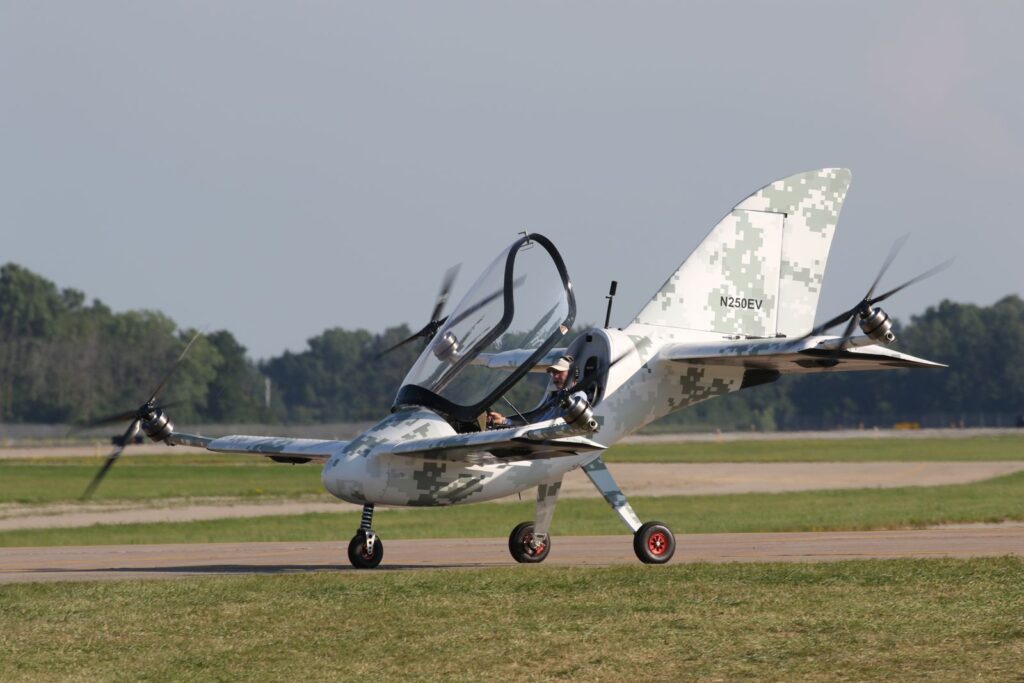
Skyfly’s Axe Vertically Capable Aircraft (VCA) has received an experimental permit from the Federal Aviation Administration (FAA).

After making its North American debut at the Experimental Aircraft Association’s AirVenture show in July, Skyfly’s first Axe VCA prototype (Serial Number 001, registration N250EV) will remain in the United States to continue its flight testing program.

By relocating testing operations to the U.S., Skyfly will benefit from more consistent year-round weather conditions, enabling steady progress through the winter months. The move will also position Axe SN001 as a customer demonstrator for the region expected to lead global demand for personal VCAs and eVTOL aircraft.

Michael Thompson, Skyfly CEO, said, “Receiving FAA Experimental authorisation is a major milestone for Skyfly. It allows us to move forward with piloted flight testing under the world’s most respected aviation regulator, while positioning the Axe at the heart of the US market – the largest and most dynamic general aviation community in the world. With this approval, the Axe begins the next phase of its journey from prototype to production aircraft, as we continue to demonstrate that a safe, efficient, and truly practical personal electric vertical take-off and landing aircraft is already here.”

The FAA has already recognised the importance of private eVTOL and VCAs to the General Aviation market, announcing updated MOSAIC rules in July that will, for the first time, enable eVTOLs to be certified as a Light Sport Aircraft.

This simplifies the certification process and will allow the Axe to be flown by those holding a Sports Pilot Certificate, in addition to a full pilot licence. The new rules will also allow the Axe to be used for some commercial purposes.


Posted by Joe Macey Joseph Macey is a Content Specialist at Advanced Air Mobility International, focusing on emerging aviation technologies since joining in 2022. He has particular expertise in eVTOLs, vertiports, and propulsion systems. A graduate of Falmouth University in Journalism, Joseph began his career in 2019 as a local reporter. His journalism experience sharpens both his reporting and interview skills, enabling him to deliver well-informed, authoritative insights on the latest trends in the aviation sector. Connect

Latest Articles

SkyDrive & AeroGulf Services Formalize Terms for 20 eVTOL Aircraft

A landmark agreement establishes the pricing and delivery framework for zero-emission aviation across the Dubai skyline starting in 2028

Jan 16, 2026
UrbanV & Pax Aeroportos Partner to Launch Brazil’s First Urban Vertiport Network

New infrastructure at Campo de Marte and Jacarepaguá aims to integrate advanced air mobility into the heart of São Paulo and Rio de Janeiro

Jan 15, 2026
TCab Tech & CSS Partner to Build Simulation Ecosystem for E20 eVTOL

Strategic collaboration aims to accelerate airworthiness certification and pilot training through high-fidelity simulation technology

Jan 14, 2026
Archer & NVIDIA Partner to Advance Physical AI in Aviation

A new collaboration between Archer and NVIDIA will apply the IGX Thor platform to develop physical AI systems designed to improve aviation safety, airspace integration, and future autonomous flight capabilities

Jan 13, 2026
Skyports Infrastructure & Linden Airport Services Partner to Modernize Miami’s Watson Island Heliport

A historic aviation site is set to become a primary hub for electric vertical take-off and landing aircraft in South Florida

Jan 12, 2026
Joby & CAE Deliver Advanced Flight Simulators to Prepare for Commercial Air Taxi Launch

High-fidelity training infrastructure moves toward FAA qualification as Joby scales pilot pipeline for 2026 operations

Jan 09, 2026