

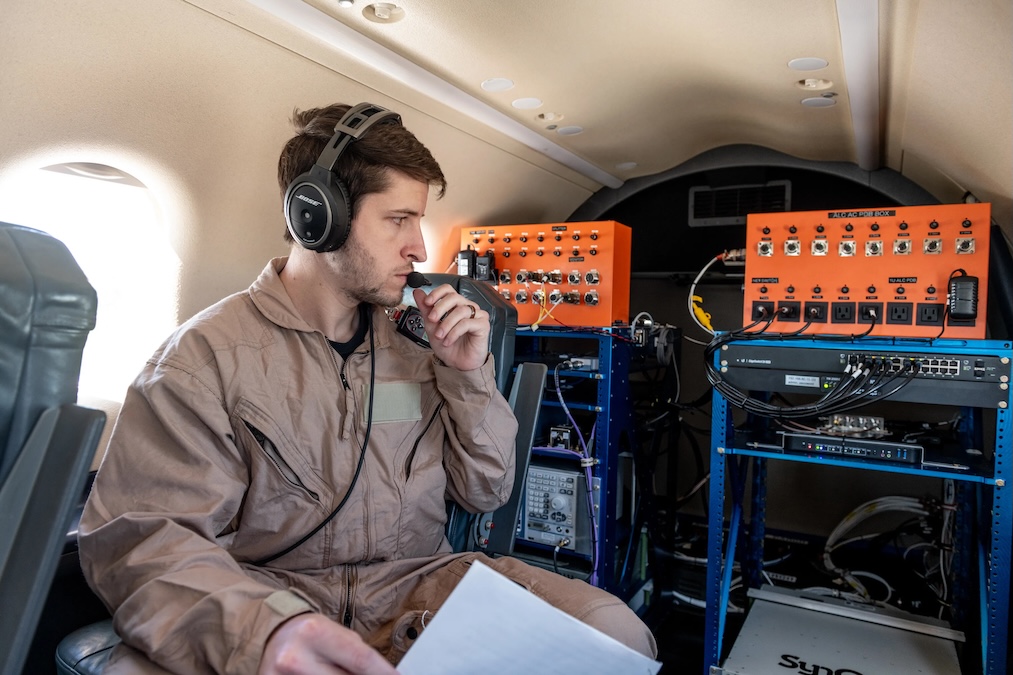
NASA has developed two advanced radio systems at the Glenn Research Center in Cleveland to explore how effectively fifth-generation cellular network technology (5G) supports air taxi communications and connectivity.
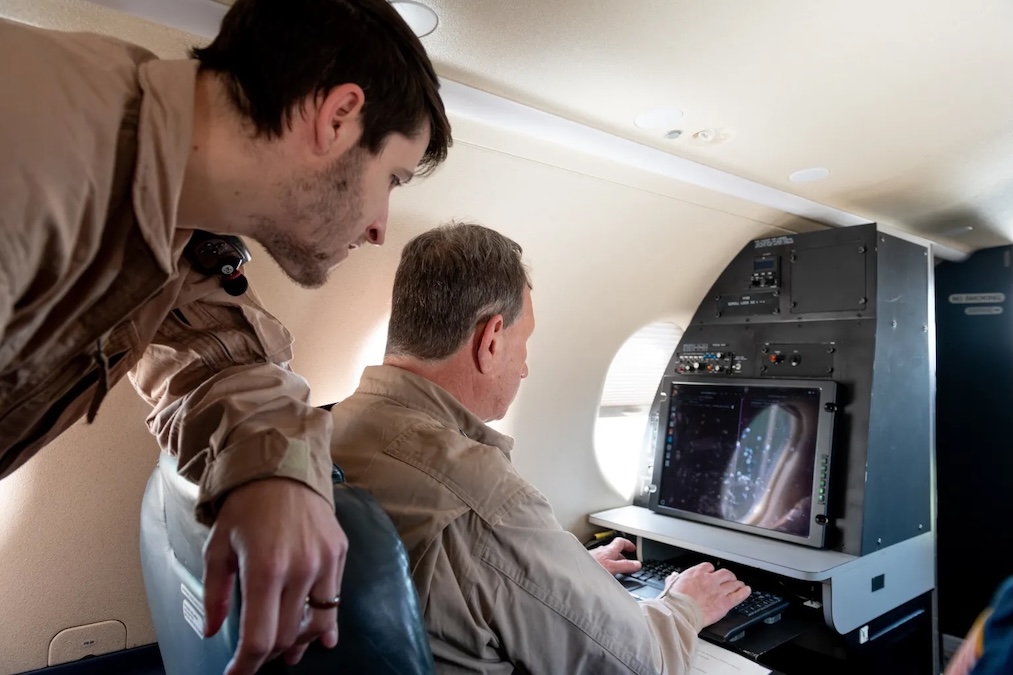
5G networks can handle large amounts of data and have lower signal transmission delays than satellite systems, making them well-suited for providing location data between aircraft in the crowded airspace. City-based ground antennas and networks maintain air taxis connectivity as they navigate around buildings, enhancing the safety of urban flights.
NASA is therefore keen to explore how the development of reliable, secure, and scalable aviation networks can leverage expertise, experience, and investments made by the cellular industry.
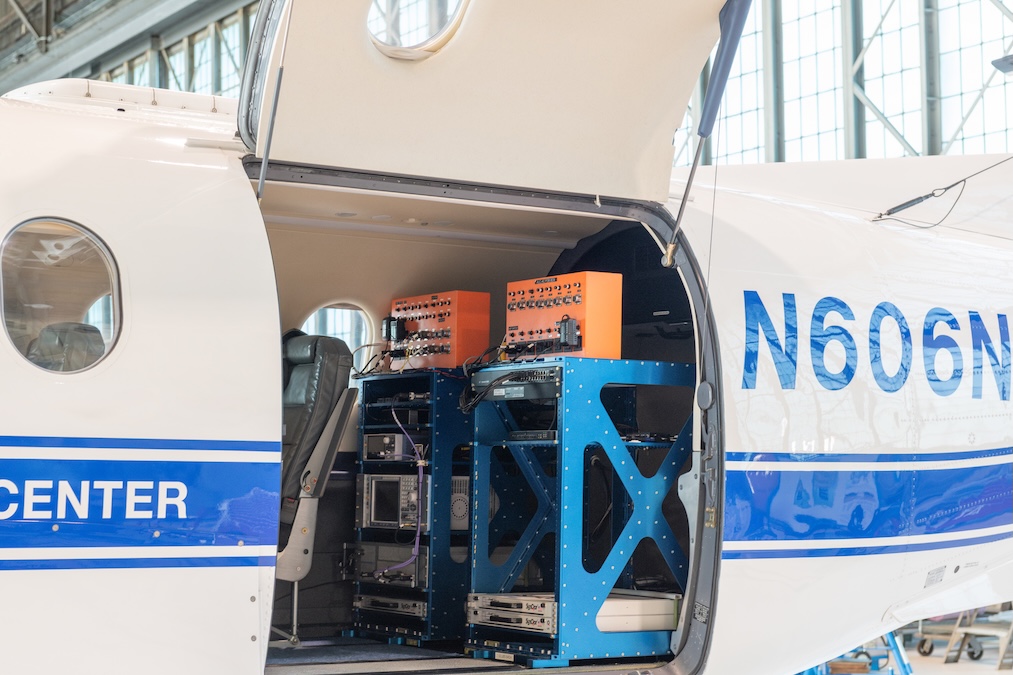
During testing, researchers placed one radio in the Pilatus PC-12 aircraft and another on the roof of Glenn’s Aerospace Communications Facility building. The team conducted signal transmission tests using a radio frequency band allocated by the Federal Communications Commission for the safe testing of drones and other uncrewed aircraft systems.
Researchers set up a system that meets current 5G standards and allows for future improvements in performance. They had an experimental license from the Federal Aviation Administration (FAA) to conduct flights.
NASA’s PC-12 flew various flight patterns near Glenn. Some patterns were used to measure how the signal weakens as the aircraft moves away from the ground station. Others highlighted areas where nearby buildings might block signals and cause interference or dead zones.
The team explored how the aircraft’s angle and position relative to the ground station affected connection quality.
NASA incorporated its new C-Band radio testbed onto the aircraft, verified its basic functionality, understood the operation of the corresponding ground station, and refined the team’s test procedures.
These initial tests were successfully completed, enabling NASA to begin research on how 5G standards and technologies can be used in existing aviation bands to provide air-to-ground and aircraft-to-aircraft communications services.
During the testing, the team also detected and confirmed the presence of propeller modulation, a form of signal degradation caused by aircraft propeller blades partially blocking radio signals as they rotate.
The effect becomes more pronounced at the lower altitudes air taxis are expected to operate, with new air taxis’ design and number of propellers potentially increasing propeller modulation issues. NASA subsequently identified this as a topic for future research.
NASA’s conclusions provide baseline performance data, sharable with the FAA and the aviation industry’s advanced air mobility sector. This can be used to assess the impact of new features or changes in communication systems, with future industry research exploring issues such as maximum data speeds and signal-to-noise ratios.
Casey Bakula, lead researcher for the project, stated, “The goal of this research is to understand how wireless cellphone networks could be leveraged by the aviation industry to enable new frontiers of aviation operations. The findings of this work could serve as a blueprint for future aviation communication network providers, like satellite navigation providers and telecommunications companies, and help guide the Federal Aviation Administration’s plan for future advanced air mobility network requirements in cities.”
NASA therefore confirms future aircraft need essential communications systems for command and control, passenger safety, and coordination to avoid collisions.