
Joby Successfully Conducts First FAA Testing Under TIA

Type Inspection Authorization (TIA) is considered the final phase of aircraft certification ahead of commercial service By Joe Macey / 07 Jan 2025
eVTOL aircraft testing by Joby
Follow AAMi

Joby Aviation has entered the final phase of certification for its electric air taxi, having conducted its first Federal Aviation Administration (FAA) testing under Type Inspection Authorization (TIA).

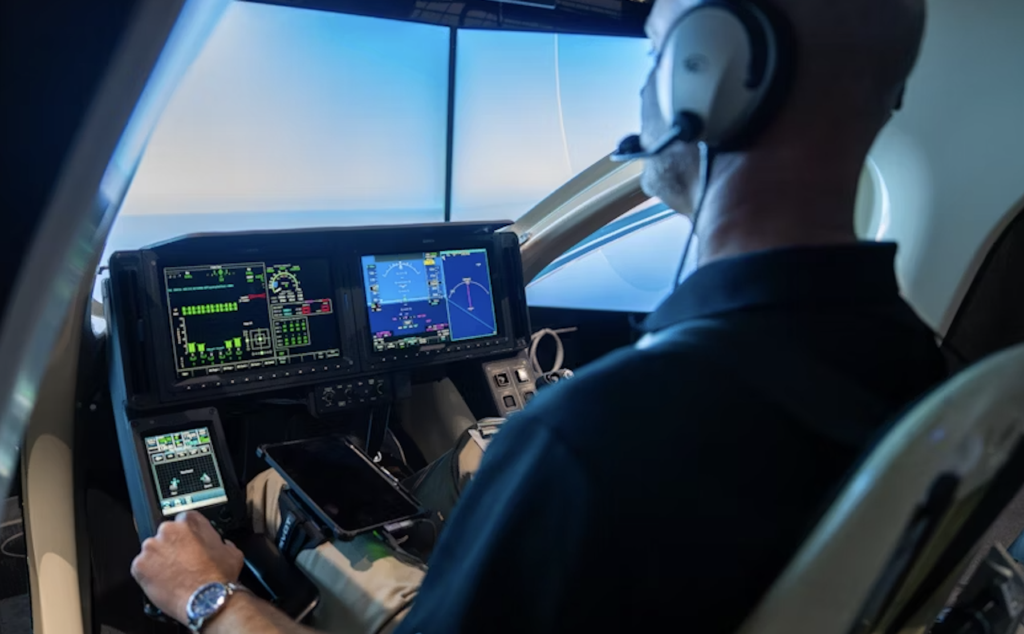
The testing involved pilots from the FAA evaluating human factors elements of flight safety using an FAA-conforming flight deck in a Joby simulator.

TIA testing is considered the final phase of the type certification process, which paves the way for an aircraft to begin commercial passenger operations. This phase involves FAA test pilots conducting testing to validate an aircraft’s performance and safety in accordance with previously-approved certification test plans.

JoeBen Bevirt, CEO and Founder at Joby Aviation, said, “This milestone demonstrates Joby’s continued industry leadership and is a reflection of the maturity of our test program and the rigorous company testing we’ve already completed.”

“As well as continuing the for-credit testing of components, aerostructures and systems that is already underway, we are targeting the start of TIA flight testing in 2025 with our first FAA-conforming aircraft, which is currently being built at our facility in Marina, California.”

The tests were conducted according to a set of criteria outlined in an FAA-approved human factors certification test plan and measured pilot workload under various expected flight conditions, physical ergonomics of the flight deck, as well as other human factors aspects of aircraft safety. Four FAA test pilots completed three days of TIA testing during the engagement.

In another major achievement earlier this month, Joby announced it has successfully completed static load testing on a FAA-conforming tail structure of the aircraft, marking the first time the Company had tested a major aerostructure for FAA credit.


Posted by Joe Macey Joseph Macey is a Content Specialist at Advanced Air Mobility International, focusing on emerging aviation technologies since joining in 2022. He has particular expertise in eVTOLs, vertiports, and propulsion systems. A graduate of Falmouth University in Journalism, Joseph began his career in 2019 as a local reporter. His journalism experience sharpens both his reporting and interview skills, enabling him to deliver well-informed, authoritative insights on the latest trends in the aviation sector. Connect

Latest Articles

Advanced Air Mobility Milestones in 2025

Advanced Air Mobility International looks back at the industry's most significant milestones in 2025, highlighting flying motorcycles, investments, and infrastructure developments

Dec 19, 2025
First Successful Flight Completed for Generation 6 Autonomous eVTOL

Wisk Aero completes the first flight of its Generation 6 autonomous eVTOL aircraft, validating core flight systems and advancing FAA type certification efforts for future passenger operations in the United States

Dec 18, 2025
Archer Secures Master Lease at Hawthorne Airport as Part of LA Air Taxi Strategy

Archer Aviation's strategic acquisition of airfield positions company for upcoming Los Angeles (LA) network launch and 2028 Olympic Games operations

Dec 17, 2025
Partners Plan UK Electric Air Taxi Network for 2029

New partnership between Vertical Aerospace, Skyports Infrastructure and Bristow aims to cut Canary Wharf to Heathrow journey times to 12 minutes using eVTOL aircraft

Dec 16, 2025
Europe’s First Multi Point-to-Point Urban Emergency Flights Conducted with Pilotless eVTOL

EHang completes Europe’s first pilotless eVTOL emergency response flights, delivering point-to-point urban operations in Zaragoza under the EU-funded U-SAVE project, advancing scalable urban air mobility

Dec 15, 2025
Vertical Unveils Valo Next-Generation eVTOL Platform

Vertical Aerospace has introduced Valo, a next-generation eVTOL featuring advanced aerodynamics, enhanced safety architecture, and class-leading payload capacity as it progresses toward 2028 certification

Dec 12, 2025