

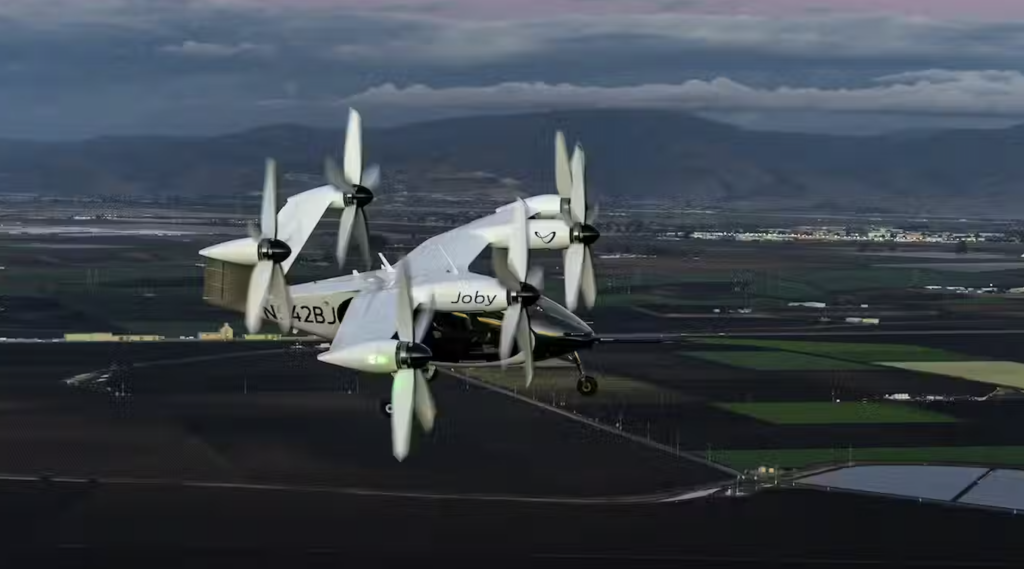
FAA Approves Joby’s Propulsion Certification Plan

The accepted certification plan includes Joby’s electric propulsion unit, propeller system, variable pitch actuation, coolant pump, nacelles, and associated electrical wiring By Joe Macey / 13 Feb 2024
Joby Receives FAA Approval for Propulsion Certification Plan
Follow AAMi

The Federal Aviation Administration (FAA) has accepted Joby Aviation’s certification plan for its propulsion system, marking a critical step towards receiving type certification for the company’s aircraft.

The propulsion system, designed by Joby, is central to the performance of the Joby aircraft. The accepted certification plan includes Joby’s electric propulsion unit, propeller system, variable pitch actuation, coolant pump, nacelles, and associated electrical wiring, clearly defining the route to certifying these systems for use in commercial passenger operations. 

“We now have an approved path across our certification program for all of the structural, mechanical, and electrical systems of our aircraft. This sets the stage for our team to execute against that path with a well-defined approach to for-credit testing and analysis as we continue to lead the industry towards certifying an electric air taxi with the FAA,” said Didier Papadopoulos, President of Aircraft OEM at Joby. “I’m grateful to the incredible Joby team as well as the dedicated personnel at the FAA who continue to work hard to bring safety and innovation together, keeping the United States at the forefront of new aviation technology and capabilities.”

The FAA type certification process is a rigorous review of the design, manufacturing, and performance of a novel aircraft type, requiring the applicant company to demonstrate that every aspect of its aircraft meets applicable safety regulations. 

With all but one certification plan accepted and the final document currently under FAA review, Joby is nearing completion of the third of five phases of the type certification process and has shifted its focus to the fourth stage, comprising detailed testing and analysis across the aircraft’s components and systems. 

Posted by Joe Macey Joseph Macey is a Content Specialist at Advanced Air Mobility International, focusing on emerging aviation technologies since joining in 2022. He has particular expertise in eVTOLs, vertiports, and propulsion systems. A graduate of Falmouth University in Journalism, Joseph began his career in 2019 as a local reporter. His journalism experience sharpens both his reporting and interview skills, enabling him to deliver well-informed, authoritative insights on the latest trends in the aviation sector. Connect

Latest Articles

Vertical Completes Third Full-Scale Prototype & Doubles Test Capacity

The final prototype aircraft will transition to piloted flight testing in early 2026 to accelerate the path toward commercialization

Dec 24, 2025
Joby Aviation & Metropolis Technologies Partner to Build 25 U.S. Vertiport Sites

New collaboration leverages AI-driven parking infrastructure and aviation logistics to integrate electric air taxis into existing urban transportation hubs

Dec 23, 2025
Archer to Establish UK Engineering Hub & Appoint Veteran Aerospace Leader

The expansion into South West England marks a strategic move to develop dual-use eVTOL technology for the British Army and defense sectors

Dec 22, 2025
Advanced Air Mobility Milestones in 2025

Advanced Air Mobility International looks back at the industry's most significant milestones in 2025, highlighting flying motorcycles, investments, and infrastructure developments

Dec 19, 2025
First Successful Flight Completed for Generation 6 Autonomous eVTOL

Wisk Aero completes the first flight of its Generation 6 autonomous eVTOL aircraft, validating core flight systems and advancing FAA type certification efforts for future passenger operations in the United States

Dec 18, 2025
Archer Secures Master Lease at Hawthorne Airport as Part of LA Air Taxi Strategy

Archer Aviation's strategic acquisition of airfield positions company for upcoming Los Angeles (LA) network launch and 2028 Olympic Games operations

Dec 17, 2025