
Single-Stick Flight Control System Tested for eVTOLs

Airbus Helicopters has trialed a new single stick design to replace cyclic, pedals, collective in electric vertical take-off and landing (eVTOL) aircraft By Joe Macey / 17 Oct 2023
Airbus Helicopters pioneers user-friendly ways to fly eVTOLs
Follow AAMi

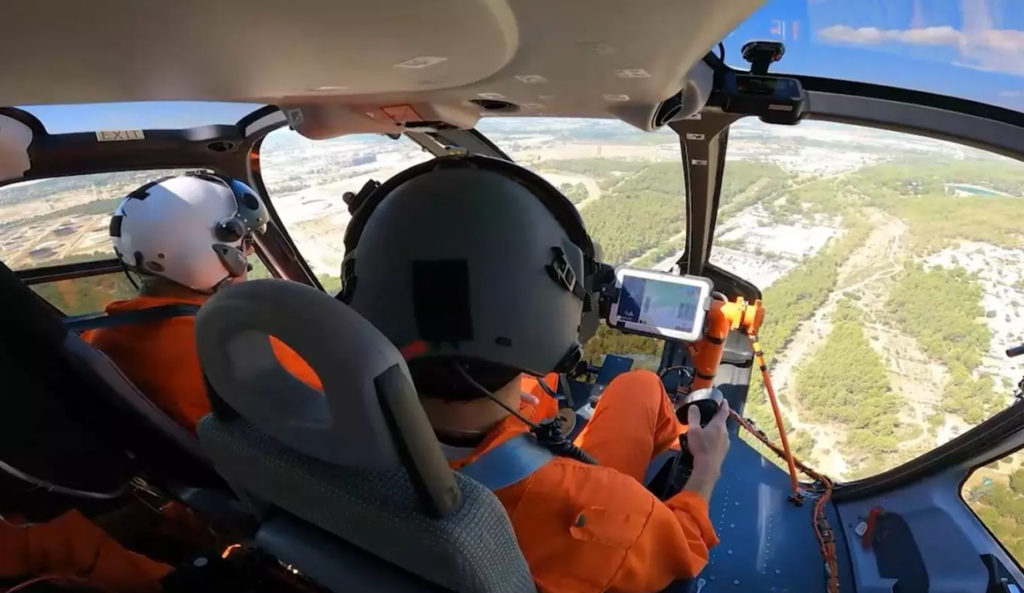
Airbus Helicopters’ demonstrator FlightLab has tested an electric flight control system in preparation of a new human machine interface (HMI) that will equip CityAirbus NextGen, Airbus’ eVTOL prototype.

This milestone represents an important step towards ushering in a new generation of electric powered urban air mobility aircraft.  

The pilot controls have been considerably simplified thanks to the enhanced piloting assistance provided by the electric flight control system. Marking a first in the helicopter industry, one single piloting stick replaces the three conventional pilot controls (cyclic, pedals, collective) and is able to control all aircraft axes. Using the single stick, the pilot is able to perform all maneuvers: take-off & landing, climb, descent, acceleration, deceleration, turn, and approach. 

The single stick takes up less space, offers improved visibility to the pilot and is combined with a revised HMI which uses simple displays, providing a selection of information specifically tailored to eVTOLs.

“From the start, we designed this system considering every certification parameter in mind as it will be a big step forward in validating the design of our urban air mobility eVTOL, CityAirbus NextGen. The advantage of an electric flight control system is enormous, especially when it comes to reducing pilot workload and ultimately enhancing mission safety. It is also a great example of how our demonstrators are used to mature the techno-bricks necessary to prepare the future of vertical flight,” said Tomasz Krysinski, Head of Research & Innovation at Airbus Helicopters. 

After the success of the flight test campaign Airbus Helicopters is working on finalizing the details of this new system before new tests are conducted in the framework of Vertex, a project conducted in partnership with Airbus UpNext that will advance autonomy even further by managing navigation and simplifying mission preparation.


Posted by Joe Macey Joseph Macey is a Content Specialist at Advanced Air Mobility International, focusing on emerging aviation technologies since joining in 2022. He has particular expertise in eVTOLs, vertiports, and propulsion systems. A graduate of Falmouth University in Journalism, Joseph began his career in 2019 as a local reporter. His journalism experience sharpens both his reporting and interview skills, enabling him to deliver well-informed, authoritative insights on the latest trends in the aviation sector. Connect

Latest Articles

Joby & CAE Deliver Advanced Flight Simulators to Prepare for Commercial Air Taxi Launch

High-fidelity training infrastructure moves toward FAA qualification as Joby scales pilot pipeline for 2026 operations

Jan 09, 2026
Skyfly & Myriad Unveil VR Motion Simulator for eVTOL Development

New mobile flight simulator from Skyfly utilizes real aircraft fly-by-wire architecture to provide high-fidelity motion cueing and virtual reality training

Jan 07, 2026
EHang Pilotless eVTOL Completes Cross-Province Flight

A successful 18-minute crossing of the Qiongzhou Strait demonstrates a 70% increase in travel efficiency compared to traditional ferry routes

Jan 07, 2026
Half-Scale eVTOL Demonstrator Begins Ground Testing Phase in India

Sarla Aviation has commenced ground testing of its half-scale eVTOL demonstrator, SYLLA SYL-X1, marking a major step toward full-scale electric vertical flight operations in India

Jan 06, 2026
EHang Completes First Public Flight of VT-35 eVTOL

The next-generation autonomous aircraft targets medium- to long-range intercity transportation as EHang expands its low-altitude ecosystem in China

Jan 05, 2026
Vertical Completes Third Full-Scale Prototype & Doubles Test Capacity

The final prototype aircraft will transition to piloted flight testing in early 2026 to accelerate the path toward commercialization

Dec 24, 2025